Preaching on the Family with Authority
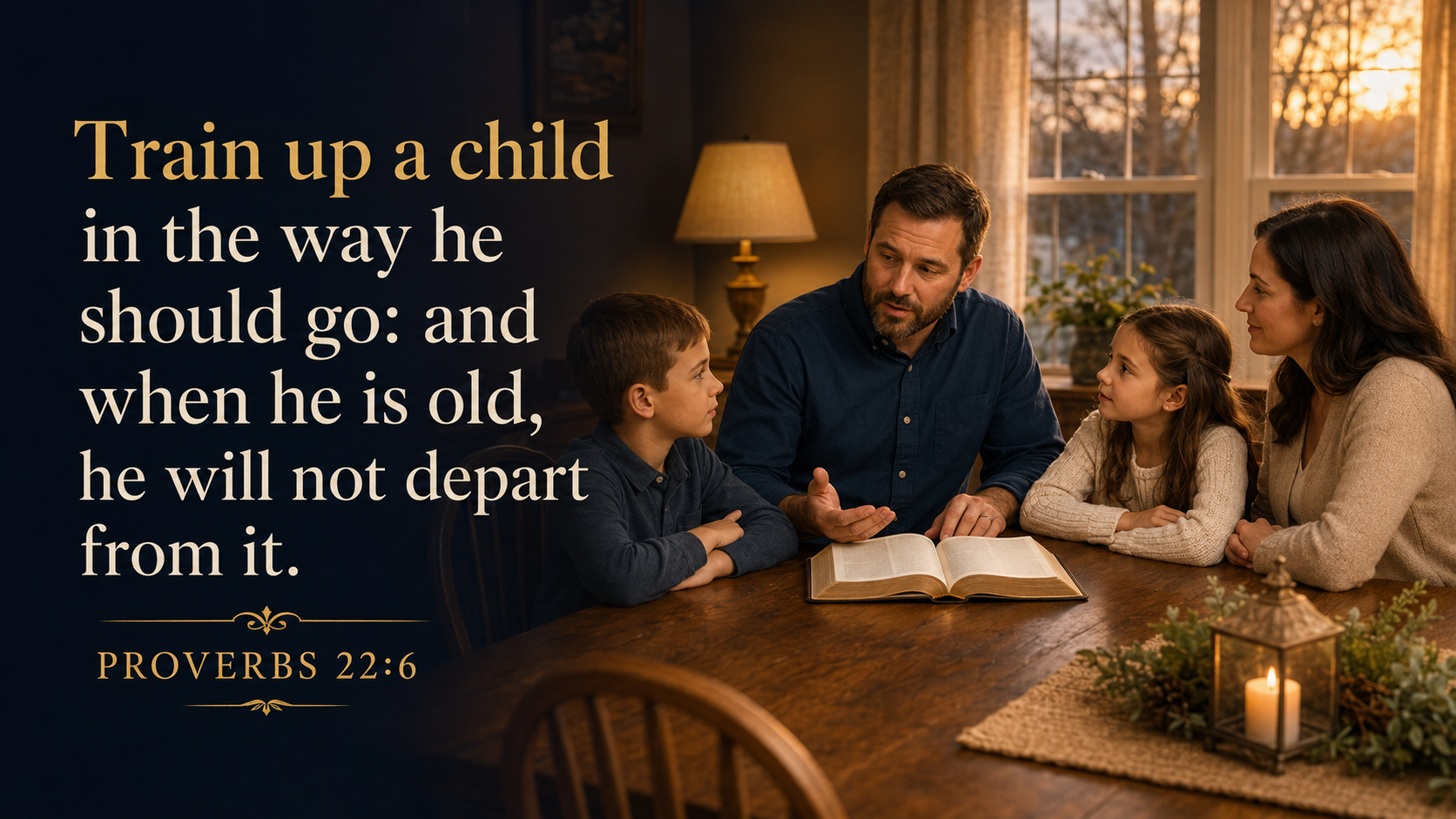
Biblical parenting is not a formula by which parents can guarantee that their children will be saved or will always choose what is right. Every child possesses a will and must personally respond to God. Nevertheless, the absence of a guarantee does not diminish the authority of God’s Word. Homes ordered according to biblical principles are far more likely to produce God-honoring fruit than homes governed by human opinion, cultural fashion, or worldly philosophy.
For many years, as a Pastor, I sought to preach a series of messages on the family between Mother’s Day and Father’s Day. My desire was that those messages would help and encourage the families of the church and that God’s people would receive the truths of His Word and apply them within their hearts and homes.
Sadly, biblical instruction is often heard but seldom heeded. Families continue to fall apart. Children continue to go astray. Lives are wounded, homes are broken, and much sorrow follows. While not every painful outcome can be prevented, many heartaches could be avoided if God’s people would simply hear and obey the Word of God.
A preacher does not stand before the congregation as a perfect man, husband, or father. He stands as a man called by God to proclaim the Holy Scriptures faithfully. His authority does not rest in his personal success, experience, or wisdom. It rests entirely in the truth of the Word he has been called to preach.
Every Christian home should be built upon that same foundation. Parents will fail, sometimes grievously, but their settled purpose should be to establish a home in which God is exalted, honored, and glorified. Such a home may appear strange to the world—and sometimes even to professing Christians. Children may not always understand why others are permitted to do things that they are not permitted to do. Nevertheless, parents are not called to measure their homes by what other families allow. They are called to measure them by the Word of God.
When the Scriptures speak, we must choose whether we will obey or disobey. Moses placed before Israel “life and death” (Deuteronomy 30:19). Joshua called the people to “choose you this day whom ye will serve” (Joshua 24:15). That same choice confronts every Christian home. Will we submit ourselves to what God has said, or will we follow our own understanding?
Some respond to biblical instruction by saying, “I disagree.” Yet their disagreement is often based not upon a careful exposition of Scripture but upon personal experience: “My parents did not do that, and I turned out all right,” or, “I attended public school, and I turned out fine.”
But “I turned out all right” is not the biblical standard. The absence of imprisonment, addiction, or public scandal is not the same as a life devoted to God. The proper question is not merely whether a person avoided ruining his life. The question is whether he knows God, walks in truth, honors biblical marriage, serves the Lord, and teaches his children to do the same.
We must therefore be careful about whom we accept as examples for our homes. Should we seek guidance from a culture that has redefined marriage, normalized immorality, weakened parental authority, and rejected the Word of God? As Paul would say, “God forbid.”
Surely, the desire of every Christian parent should agree with the words of John:
“I have no greater joy than to hear that my children walk in truth.”
—3 John 4
When children grow to love God, honor their parents, preserve moral purity, enter marriage honorably, work faithfully, provide for their families, and teach biblical truth to the next generation, no parent can take the glory. Salvation is of the Lord, and every good fruit is produced by His grace.
At the same time, God ordinarily works through the means He has appointed. Biblical instruction, loving discipline, parental example, moral boundaries, faithful church attendance, and a home governed by Scripture all matter. Obedience does not place God under obligation, nor does it eliminate the possibility of a child’s rebellion. Nevertheless, the principles of God’s Word remain the wisest, safest, and most fruitful foundation upon which a family can be built.
Parents must therefore ask: What kind of fruit are we cultivating? Are we building according to the pattern of Scripture, or are we following the changing standards of the world? Are our decisions shaped by God’s Word, or do we alter its meaning whenever it conflicts with our preferences?
If we imitate the world, we should not be surprised when our homes produce worldly fruit. But if we desire children who honor their parents, walk in truth, cherish marriage, and serve the Lord, then we must listen carefully to God’s Word and determine, by His grace, to order our homes according to its commands.
There are no perfect parents and no guaranteed outcomes. But there is a perfect Word, a faithful God, and a biblical path that remains wiser than every invention of man. Our duty is to walk in that path, entrust our children to the Lord, and leave the results in His sovereign hands.